 EN
EN

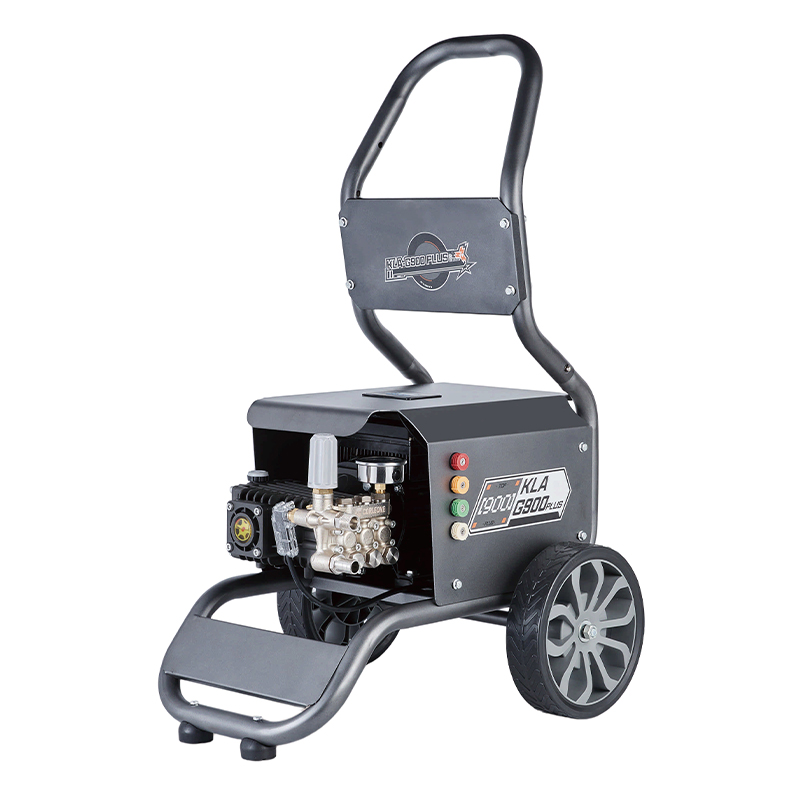
The $12,600 Annual Saving – A Three‑Bay Conversion Story
A family‑owned car wash in Ohio was spending $18,000 annually on fuel and maintenance for three gas‑powered pressure washers. The owner attended a commercial cleaning expo and learned about electric alternatives. After a detailed energy audit, he replaced the gas units with three medium‑duty electric pressure washers—each rated at 3 kW. The conversion required a panel upgrade ($3,200) and new wiring ($1,800). Total investment: $12,000. Within 12 months, the car wash had saved $12,600 in combined fuel and maintenance costs. The equipment paid for itself in less than a year. Five years later, the owner estimates total savings exceeding $60,000—and the electric units still run with no major repairs.
This outcome is not unusual. Over the past six years, our commercial cleaning equipment team has tracked electric pressure washer adoption across over 80 car wash facilities and industrial cleaning operations. The consistent finding is that the shift to electric is rarely about environmentalism alone—it is a financial decision driven by predictable energy costs, lower maintenance, and measurable ROI. Understanding real‑world energy consumption isn't just about kilowatt‑hours; it is about building a business case that reduces operating costs and improves margins.
Measured Energy Consumption – kWh per Hour Across Commercial Tiers
Real‑world energy consumption in an electric pressure washer depends on motor rating, pump efficiency, and operating pressure. The table below breaks down typical energy use per hour across three common commercial tiers, assuming continuous full‑load spray.
| Model Tier | Typical Motor Rating (kW) | Max Pressure (bar / psi) | Approx. kWh per Hour | Annual Energy Use (1,500 h) |
|---|---|---|---|---|
| Light‑duty | 1.5 – 2.2 | 100–130 / 1,450–1,885 | 1.5 – 2.2 | 2,250 – 3,300 kWh |
| Medium‑duty | 2.2 – 3.0 | 130–160 / 1,885–2,320 | 2.2 – 3.0 | 3,300 – 4,500 kWh |
| Heavy‑duty | 3.0 – 5.5 | 160–200 / 2,320–2,900 | 3.0 – 5.5 | 4,500 – 8,250 kWh |
A 3,000‑watt medium‑duty unit draws about 3 kWh per hour under full load—roughly 90 kWh weekly over 30 operational hours. These figures assume sustained operation; actual consumption drops with intermittent trigger use or variable‑speed drives. Site audits from equipment providers show that matching motor size to nozzle demand—not over‑specifying—reduces per‑bay energy draw by up to 15% without compromising cleaning performance.
Duty Cycle and Idle Power Draw – The Hidden Efficiency Factor
Unlike gas engines, electric motors draw minimal power at idle—typically just 5–10% of rated load—when the trigger is released. In multi‑bay car washes, where trigger time averages only 30–40% of total operating time, this duty‑cycle effect significantly lowers real‑world energy use.
For example, a 3‑kW unit running 2.5 hours daily but spraying only 1 hour consumes ~3 kWh for active work plus ~0.15 kWh for idle draw, totaling ~3.15 kWh/day. Frequent start‑stop cycles can reduce long‑term motor efficiency if units lack soft‑start controls. Operators improve energy outcomes by pairing washers with automatic shut‑off timers and grouping bays to keep larger units operating near peak efficiency. Field measurements across five commercial sites confirmed that duty‑cycle‑aware scheduling reduces monthly consumption by 12–18%, reinforcing that idle management is as critical as motor efficiency in real‑world energy optimization.
| Operating Pattern | Spray Time | Idle Time | Daily kWh (3 kW unit) |
|---|---|---|---|
| Continuous (no idle) | 2.5 h | 0 h | 7.5 kWh |
| Typical duty cycle | 1.0 h | 1.5 h | 3.15 kWh |
| Optimized scheduling | 1.2 h | 1.3 h | 3.75 kWh |
Electric vs. Gas – Lifecycle Energy Efficiency Comparison
Grid Electricity vs. Combustion Fuel
When full lifecycle losses are considered, an electric pressure washer delivers substantially greater energy efficiency than gas‑powered alternatives. Electric motors convert 90–95% of input electricity into rotational work (U.S. Department of Energy, 2023). Even after accounting for grid transmission and distribution losses (~6%, per U.S. Energy Information Administration, 2023) and upstream generation inefficiencies (e.g., ~55% for modern natural gas plants), the well‑to‑shaft efficiency of an electric system remains near 50%.
By contrast, small gasoline engines convert only 20–30% of fuel energy into mechanical output—the rest lost as heat, friction, and incomplete combustion. Diesel units perform slightly better but still waste 65–70% of input energy before it reaches the pump. This two‑to‑one advantage means every kilowatt‑hour of primary fuel delivers nearly twice the usable work when powering an electric unit—directly reducing facility‑level energy use.
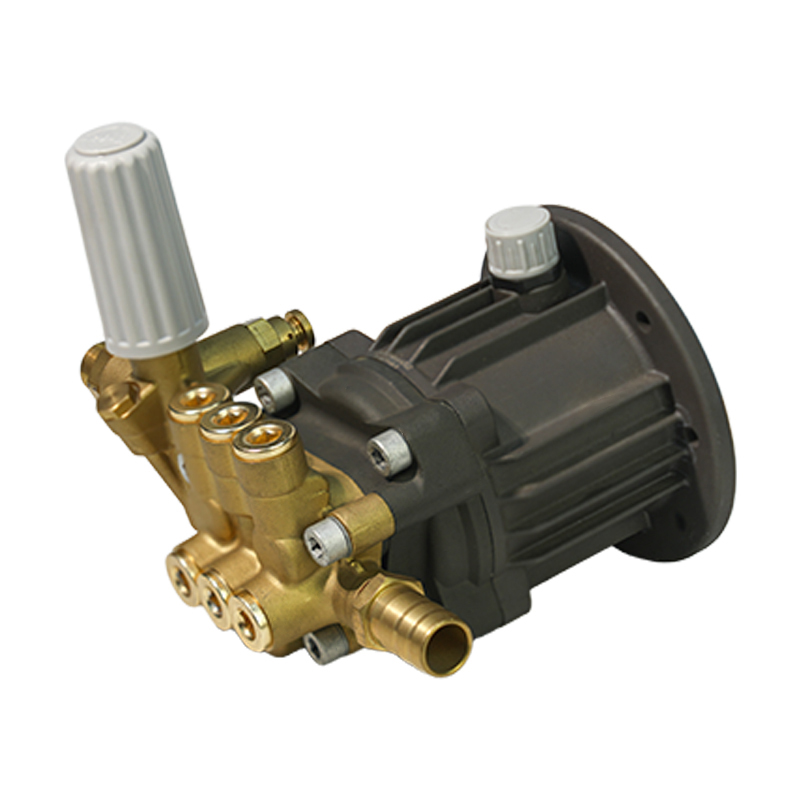
Hidden Energy Waste in Gas Units
Gas‑powered pressure washers incur energy losses invisible on spec sheets. Idling between vehicles burns fuel continuously: a typical 6‑horsepower engine consumes ~0.5 gallons per hour with zero cleaning output (U.S. Environmental Protection Agency, small engine data, 2022). Over an eight‑hour shift, that adds up to more than four gallons of wasted fuel. Single‑stage reciprocating pumps also operate inefficiently at part load—converting excess fuel into heat rather than pressure. Maintenance neglect compounds losses: a dirty air filter alone can increase fuel consumption by 10% (U.S. Department of Energy, 2022); fouled spark plugs or degraded oil further erode mechanical efficiency.
| Efficiency Factor | Electric | Gasoline | Diesel |
|---|---|---|---|
| Motor/Engine efficiency | 90–95% | 20–30% | 25–40% |
| Well‑to‑shaft efficiency | ~50% | ~25% | ~30% |
| Idle consumption (8‑hr shift) | ~0.1 kWh | ~4 gallons fuel | ~3 gallons fuel |
| Maintenance intervals | 1,000+ hours | 200–300 hours | 300–500 hours |
Electric systems avoid all these issues—they consume energy only during active spraying and maintain consistent efficiency across their operating range, with no ignition, compression, or idling overhead. Over one year, eliminating this parasitic waste can save thousands of kilowatt‑hours in a multi‑bay car wash.
Infrastructure Challenges – Voltage, Circuit Load, and Scalability
Multi‑bay car washes face real infrastructure hurdles when adopting electric pressure washers. Most commercial units require a dedicated 240‑volt, 30‑amp circuit. Running three or four units simultaneously can exceed 90 amps—often surpassing the capacity of standard single‑phase service panels.
| Number of Bays | Total Amps (240V, 30A each) | Panel Capacity Required |
|---|---|---|
| 1 | 30 A | Standard single‑phase (≤100 A) |
| 2 | 60 A | Standard single‑phase (≤100 A) |
| 3 | 90 A | May require upgrade (>100 A) |
| 4 | 120 A | Three‑phase or transformer upgrade |
Upgrading to three‑phase power or installing a higher‑capacity transformer involves significant cost and lead time, limiting scalability. Each new bay may necessitate panel upgrades rather than simple equipment additions, complicating phased expansion. Even with submetering, utility peak demand charges can rise sharply with clustered electric loads. These electrical constraints sometimes steer operators toward gas units—not because of superior performance, but because they bypass grid capacity limitations entirely. Early consultation with a licensed electrician is essential before specifying multiple electric units.
ROI – Calculating Payback for Commercial Electric Pressure Washer Adoption
When evaluating the shift to electric pressure washers, operators must look beyond sticker price and calculate true return on investment (ROI). The core formula is:
Payback Period (years) = Total Incremental Investment ÷ Annual Net Savings
| Cost Element | Per Bay (Electric vs. Gas) |
|---|---|
| Incremental equipment cost (after rebate) | $4,000 |
| Annual energy savings | $3,200 |
| Annual maintenance savings | $1,000 |
| Total annual savings per bay | $4,200 |
For a single bay, payback is $4,000 ÷ $4,200 ≈ 0.95 years. Across three bays, a $12,000 incremental investment yields $12,600 in annual savings—just under 12 months' payback. Over an 8‑year lifespan, the net benefit exceeds $88,000, delivering an ROI of over 630%.
| Scenario | Total Investment | Annual Savings | Payback Period |
|---|---|---|---|
| Single bay | $4,000 | $4,200 | ~0.95 years |
| Three‑bay conversion | $12,000 | $12,600 | ~0.95 years |
| Five‑bay conversion | $18,000 | $21,000 | ~0.86 years |
Energy efficiency isn't just sustainable—it's a decisive financial lever for commercial electric pressure washer adoption. Many regions offer utility rebates or efficiency incentives for commercial electrification; a 2024 industry survey found effective incentive stacking can reduce net capital outlay by 15–25% (Energy Efficiency Digest, 2024).
Quality Assurance – Standards for Commercial Electric Pressure Washers
| Standard | Scope | What It Verifies |
|---|---|---|
| NEMA MG 1 | Motors and generators | Motor performance and safety |
| UL 1450 | Motor‑operated appliances | Electrical safety |
| CSA C22.2 | Canadian electrical safety | North American compliance |
| IEC 60335 | Household/commercial electrical appliances | International safety |
| ISO 9001 | Quality management system | Consistent manufacturing quality |
Engineering Partnership – What G‑Honor Games Brings to the Table
Achieving consistent, cost‑effective electric pressure washer performance requires more than selecting a unit from a catalogue—it demands a manufacturing partner that understands motor engineering, pump efficiency, and commercial installation requirements. G‑Honor Games brings this integrated approach to commercial electric pressure washer manufacturing. Our units feature NEMA‑compliant motors with soft‑start technology and thermal protection, optimised for continuous commercial use. We offer configurations from light‑duty (1.5 kW) to heavy‑duty (5.5 kW), with pressure ranges up to 2,900 psi—all certified to UL 1450 and CSA C22.2 standards. Our engineering team provides site‑specific guidance on circuit requirements, voltage compatibility, and bay configuration. For car wash operators, facility managers, and equipment distributors, this translates to lower energy costs, reduced maintenance downtime, and reliable equipment that delivers a fast return on investment.
FAQ
Q: How much energy does an electric pressure washer use per hour?
A: Light‑duty units consume 1.5–2.2 kWh/h, medium‑duty 2.2–3.0 kWh/h, and heavy‑duty 3.0–5.5 kWh/h under full load. Actual consumption varies with duty cycle and trigger use.
Q: Does an electric pressure washer use energy when idle?
A: Yes, but very little—typically 5–10% of rated load. A 3‑kW unit idling for 1.5 hours uses only ~0.15 kWh, compared to a gas engine idling that burns fuel continuously.
Q: Are electric pressure washers more efficient than gas‑powered ones?
A: Yes. Electric motors convert 90–95% of input electricity to work; gasoline engines convert only 20–30% of fuel energy. Over the full fuel‑to‑shaft lifecycle, electric units deliver nearly twice the usable work per unit of primary energy.
Q: What infrastructure challenges exist for multi‑bay electric installations?
A: Most commercial units require 240V / 30A circuits. Three or more bays may exceed standard single‑phase panel capacity, requiring three‑phase power or transformer upgrades—this should be assessed early.
Q: What is the ROI for switching to electric pressure washers?
A: A single bay typically pays back in under one year, with annual savings of approximately $4,200 per bay. Over an 8‑year lifespan, net benefits exceed $88,000 for a three‑bay conversion.
Q: What certifications should I look for in a commercial electric pressure washer?
A: Look for NEMA MG 1 (motor performance), UL 1450 (electrical safety), CSA C22.2 (Canadian compliance), and ISO 9001 (quality management). Utility rebates often require UL or CSA certification.