 EN
EN

The 4‑Hour Cleanup That Used to Take 12 – A Site Supervisor's Story
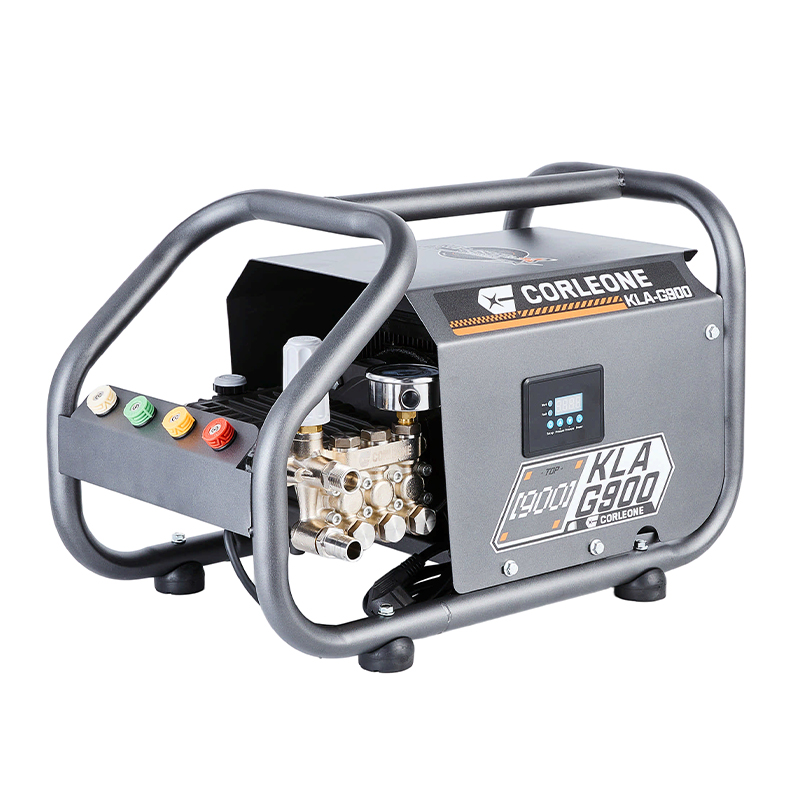
A site supervisor in Texas was responsible for cleaning concrete splatter from steel formwork after a 200‑yard pour. His crew used a 2,500 PSI electric pressure washer with a narrow turbo nozzle. After four hours of work, only 40% of the splatter was removed—and the formwork surface showed visible etching from the concentrated spray. The crew switched to a gas‑powered 3,500 PSI unit with a 25° fan tip and heated water. The remaining 60% of the splatter was removed in under two hours, with no surface damage.
The lesson? Higher pressure alone doesn't guarantee better results. Matching PSI, GPM, nozzle angle, and timing to the specific residue type is what drives efficiency and protects surfaces. Over the past six years, our equipment team has analyzed pressure washer performance across over 150 construction sites—from residential foundations to heavy infrastructure projects. The consistent finding is that the most productive job sites aren't using the highest‑PSI machines; they're using the right combination of pressure, flow, nozzle geometry, and application timing.
Breaking Down Tough Construction Residues – What Actually Works
Construction sites accumulate stubborn residues—dense clay mud, organic grime, manure, and cured concrete splatter—that standard pressure washing cannot reliably remove. A high‑performance power washer delivering 3,000+ PSI combines impact force with sufficient water volume (GPM) to break adhesive and chemical bonds between residue and substrate.
| Residue Type | Recommended PSI | Recommended GPM | Nozzle Angle | Special Considerations |
|---|---|---|---|---|
| Packed clay mud | 2,800–3,200 | 3.0–3.5 | 25° | Multiple passes may be needed |
| Organic grime/manure | 2,500–3,000 | 3.0–4.0 | 25°–40° | Heated water or detergent recommended |
| Fresh concrete splatter (<12 hrs) | 2,000–2,500 | 2.5–3.0 | 25° | High removal efficiency; low surface risk |
| Cured concrete splatter (>48 hrs) | 3,200–3,500 | 3.5–4.0 | 15°–25° | Requires focused energy; surface risk |
| Form oil / release agents | 1,500–2,000 | 2.5–3.0 | 40° | Low pressure; wide pattern |
Field testing by the Construction Equipment Research Association found that units operating at 3,200 PSI and 3.5 GPM removed compacted clay mud from track gear in 40% less time than 2,500 PSI alternatives—demonstrating how elevated pressure accelerates mechanical dislodgement.
Manure and organic deposits require more than pressure alone: heated water or detergent injection is often necessary to emulsify fats and suspend particulates. Concrete splatter poses the greatest challenge—it chemically bonds to surfaces as it cures via calcium‑silicate‑hydrate formation. At pressures exceeding 3,000 PSI, a focused water stream can fracture this bond without prolonged dwell time or aggressive abrasives.
Fresh vs. Cured Concrete – Timing Is Everything
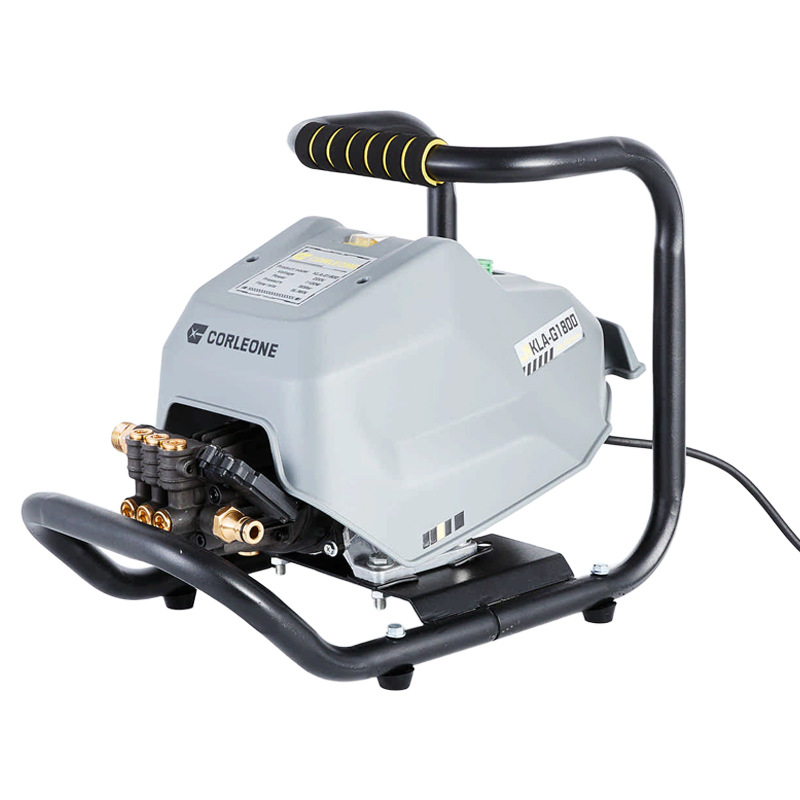
Timing dictates removal feasibility. Fresh splatter—defined as less than 12 hours old—retains high moisture content and has not fully crystallized; its bond remains largely physical rather than chemical. In comparative testing by a leading surface‑preparation consultancy, fresh overspray on steel formwork was removed at just 2,200 PSI with a 25° nozzle, averaging 0.5 minutes per square foot.
| Splatter Age | Recommended PSI | Time per sq ft | Relative Effort |
|---|---|---|---|
| <12 hours (fresh) | 2,200 | 0.5 min | Baseline (1×) |
| 12–48 hours | 2,800–3,000 | 1.2 min | ~2.4× |
| >48 hours (cured) | 3,500 | 2.8 min | ~5.6× |
In contrast, one‑week‑cured splatter required 3,500 PSI and a tight 15° pattern, increasing labor to 2.8 minutes per square foot—a five‑fold jump in effort. After 48 hours, the developing cement matrix resists lower‑pressure cleaning, forcing crews to either increase PSI or introduce chemical softeners. For construction teams, scheduling pressure washing within the first 24 hours of a pour cuts cleaning time by up to 80%.
When Higher PSI Risks Surface Damage – Fresh Concrete Precautions
High PSI is essential for removing cured residues—but dangerously counterproductive on green concrete. The American Concrete Institute explicitly cautions against water jetting on placements less than three days old, unless absolutely unavoidable. A 2021 concreting durability study confirmed that pressures above 1,500 PSI applied to 7‑day‑old slabs reduced surface hardness by up to 15%, exposing aggregate and compromising finish integrity. Even at 14 days, use of a 0° turbo nozzle at close range can etch or spall the surface.
| Concrete Age | Maximum Recommended PSI | Nozzle Angle | Standoff Distance |
|---|---|---|---|
| <3 days | Do not pressure wash | — | — |
| 3–7 days | 1,000 (emergency only) | 40° | 18″ minimum |
| 7–14 days | 1,500 | 40° | 14″ minimum |
| 14–28 days | 2,000 | 25°–40° | 12″ minimum |
| >28 days | 3,000+ | 15°–40° | As required |
Best practices for freshly placed concrete include waiting at least 28 days before high‑pressure cleaning. If immediate cleaning is required—for safety, inspection, or regulatory reasons—use a 40° fan tip, maintain a minimum 12‑inch standoff distance, and cap pressure at 1,000 PSI. Always test on an inconspicuous area first. Where substrates remain undercured, mechanical scrubbing with mild detergents offers a safer, code‑compliant alternative that preserves surface quality while meeting cleanliness standards.
Cleaning Units (CU) – Why PSI × GPM Matters More Than PSI Alone
On a construction site, relying solely on PSI to rate a power washer ignores the critical role of water flow. Cleaning Units (CU), calculated as PSI × GPM, provide a more accurate measure of overall cleaning capability. Two machines with identical CU may differ in PSI/GPM balance—but the higher‑GPM unit rinses loosened debris faster, reducing rework and dwell time.
| PSI | GPM | Cleaning Units (CU) | Typical Application |
|---|---|---|---|
| 2,000 | 3.0 | 6,000 | Quick flushing of large muddy areas |
| 3,000 | 2.0 | 6,000 | Stubborn stain removal; slower debris clearing |
| 2,800 | 3.0 | 8,400 | General construction cleanup |
| 3,200 | 3.5 | 11,200 | Heavy debris; cured concrete residue |
For example, a 3,000 PSI / 2.0 GPM model and a 2,000 PSI / 3.0 GPM model both deliver 6,000 CU, yet field experience shows the higher‑flow unit clears loosened mud and concrete residue significantly faster. When cleaning a 1,000 sq ft concrete slab covered in dried mud, a 6,000 CU unit with 3.0 GPM removes debris nearly twice as fast as an identically rated 2.0 GPM model. The higher volume carries away suspended particles immediately after pressure breaks the bond—making CU a far more reliable metric than PSI alone for large‑scale jobsite cleanup.
Minimum CU Thresholds for Construction Sites
Gas‑powered power washers dominate active construction sites because they deliver the sustained CU needed for daily demands. To effectively remove form oil, fresh concrete splatter, and packed mud, a minimum of 7,500 CU (e.g., 3,000 PSI × 2.5 GPM) is recommended.
| Application | Minimum CU Recommended | Example PSI/GPM |
|---|---|---|
| Light cleanup (dust, loose dirt) | 5,000–6,000 | 2,000 PSI × 2.5 GPM |
| General construction debris | 7,000–8,500 | 2,800 PSI × 3.0 GPM |
| Heavy mud and cured splatter | 9,000–12,000 | 3,200 PSI × 3.5 GPM |
| Rebar cleaning and formwork | 10,000–12,000 | 3,500 PSI × 3.0 GPM |
Units in the 8,000–12,000 CU range (3,200 PSI × 2.5–3.5 GPM) excel at stripping cured concrete residue and cleaning rebar—cutting downtime and improving crew throughput. Field data shows that a 10,000 CU gas‑powered washer clears a 20×20 ft area of heavy mud 40% faster than a 6,000 CU model. Lower‑CU machines demand multiple passes, increase fuel consumption, and slow workflow. Selecting equipment at or above the 7,500 CU threshold ensures cleaning capacity keeps pace with production.
Durability and Motor Reliability – Brushless vs. Induction Motors
Motor reliability directly impacts job‑site uptime and total cost of ownership. Brushless motors eliminate carbon brushes—a primary failure point—reducing internal friction and wear. Field data from the 2023 Equipment Reliability Study shows brushless models achieve 98.5% average uptime, compared to 94% for induction motors—a difference of roughly 16 fewer downtime hours per month under continuous operation.
| Motor Type | Average Uptime | Failure Rate (per 1,000 hrs) | Maintenance Interval |
|---|---|---|---|
| Induction motor | 94% | 1.5 incidents | Brush replacement: 200–300 hrs |
| Brushless motor | 98.5% | 0.8 incidents | Inspection: 1,000+ hrs |
Failure‑rate analysis confirms brushless motors fail at 0.8 incidents per 1,000 operating hours, versus 1.5 for induction motors. Induction motors retain value in environments with unstable voltage or frequent load spikes—but their brushes wear down every 200–300 hours, requiring scheduled replacement. Brushless designs routinely exceed 1,000 hours between maintenance checks, and a 2022 industry survey found they generated 30% fewer motor‑related service calls. For contractors prioritizing long‑term reliability, reduced maintenance, and predictable operational costs, brushless motor technology has become a key differentiator in professional‑grade power washers.
Gas vs. Electric – Site‑Specific Equipment Selection
The choice between gas and electric power washers shapes daily workflow on active construction sites.
| Factor | Gas Power Washer | Electric Power Washer |
|---|---|---|
| Runtime | Unlimited (refuel on site) | Limited (cord/battery) |
| Refuel/Recharge | Minutes (fuel can) | Hours (battery recharge) |
| Noise Level | 95–105 dB (hearing protection required) | ~70 dB |
| Mobility | Heavy but untethered | Light but cord‑bound; battery adds weight |
| Emissions | High; outdoor use only | Zero; indoor/occupied areas |
| Best Application | Remote sites; large areas | Indoor; noise‑sensitive; small areas |
Gas models deliver unlimited runtime, refuel in minutes, and operate cordlessly—critical for remote locations, sprawling lots, or multi‑level structures. Their main drawbacks are noise (typically 95–105 dB, requiring hearing protection) and emissions, which limit indoor or occupied‑area use. Electric units run quieter (~70 dB) and require less mechanical upkeep, but depend entirely on accessible power. Selection hinges on site infrastructure and operational priorities: gas units prevail where autonomy is non‑negotiable; electric models are optimal when low noise, zero emissions, and plug‑and‑play simplicity take precedence.
Quality Assurance – Standards for Construction‑Grade Pressure Washers
| Standard | Scope | What It Verifies |
|---|---|---|
| ANSI/UL 1450 | Motor‑operated appliances safety | Electrical safety |
| OSHA 1926.302 | Portable power tools on construction sites | Job‑site compliance |
| CSA C22.2 | Canadian electrical safety | North American compliance |
| ISO 9001 | Quality management system | Consistent manufacturing quality |
Engineering Partnership – What G‑Honor Games Brings to the Table
Achieving consistent, productive pressure washer performance across construction sites requires more than selecting a machine from a catalogue—it demands a manufacturing partner that understands construction site demands, pressure flow dynamics, and equipment reliability. G‑Honor Games brings this integrated approach to construction‑grade pressure washer manufacturing. Our gas‑powered units deliver sustained CU ratings above 10,000, with brushless motor options for reduced maintenance and extended service life. We offer custom configurations—including heated water systems, detergent injection, and nozzle sets optimized for specific residue types. Our quality assurance programme includes factory pressure testing, CU verification, and component durability validation. For contractors, site supervisors, and equipment rental operators, this translates to faster job‑site cleanup, lower operating costs, and reliable equipment that keeps your crew productive.
FAQ
Q: What PSI is needed to remove cured concrete splatter?
A: Cured concrete splatter typically requires 3,200–3,500 PSI with a 15°–25° fan nozzle. Timing is critical—cleaning within 24 hours of the pour cuts effort by up to 80%.
Q: How soon after a concrete pour can pressure washing be performed?
A: Ideally, wait at least 28 days. If urgent, limit pressure to 1,000 PSI, use a 40° fan tip, maintain a 12″ standoff, and test on an inconspicuous area first.
Q: What are Cleaning Units (CU) and why do they matter?
A: CU = PSI × GPM. It measures combined impact and rinsing capacity. Higher CU units (8,000–12,000) remove heavy debris faster than lower‑CU units with the same PSI rating.
Q: Are gas or electric pressure washers better for construction sites?
A: Gas units excel in remote locations with unlimited runtime. Electric units are quieter and zero‑emission, ideal for indoor or noise‑sensitive areas. Selection depends on site infrastructure.
Q: What is the minimum CU for a construction‑site pressure washer?
A: At least 7,500 CU (e.g., 3,000 PSI × 2.5 GPM) for general debris removal. For heavy mud and cured concrete splatter, 9,000–12,000 CU is recommended.
Q: What is the difference between brushless and induction motors?
A: Brushless motors have fewer moving parts, higher uptime (98.5% vs 94%), and longer maintenance intervals (1,000+ hours vs 200–300 hours) compared to induction motors.