 EN
EN

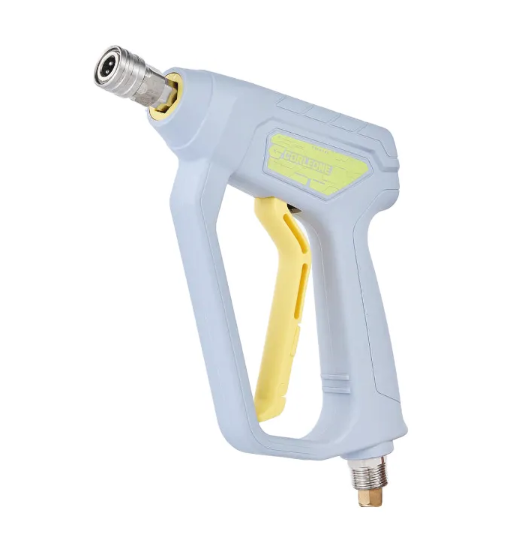
Select the Right Nozzle and Spray Angle for Each Surface
Why Spray Angle Directly Controls Impact Force and Surface Stress
How wide or narrow the spray comes out of a pressure washer nozzle makes all the difference when it comes to how hard the water hits surfaces. When using wider nozzles around 40 degrees, the water spreads across more area but loses quite a bit of power - maybe as much as three quarters of what narrower nozzles deliver. This kind of spread helps protect things like pine wood from getting those annoying little etch marks or old bricks from cracking under pressure. On the flip side, those really tight settings between 15 and zero degrees create something almost like a focused beam that packs serious punch right at point blank range. We're talking about forces exceeding two thousand five hundred pounds per square inch which can easily take off car paint jobs or tear apart cedar siding if someone gets too close. According to research in the field, about six out of ten times people end up damaging surfaces they didn't mean to because they picked the wrong spray angle for the job.
Nozzle Guide: Matching 0°–40° Tips to Concrete, Wood, Vinyl, Brick, and Painted Surfaces
Select nozzles systematically to balance cleaning power and material preservation:
- Concrete/Asphalt: Use 15°–25° tips at 12" distance. Handles grease without eroding mortar.
- Wood Decks: 40° tips only. Higher angles prevent fiber lifting. Maintain 18" minimum distance.
- Vinyl Siding: 25°–40° nozzles. Test hidden areas first—over 1,500 PSI risks cracking.
- Painted Surfaces: Start with 40° at 24". Never exceed 25° unless clearing heavy grime.
- Brick/Stone: 15°–25° for mortar joints. Avoid 0° near porous stone to prevent spalling.
Always begin with the widest angle and increase intensity gradually after spot-testing.
Maintain a Safe Operating Distance with Your Pressure Washer Gun
The 12–24 Inch Rule: Evidence-Based Distance Guidelines by Material Type
Over 6,000 pressure washer injuries occur annually (Consumer Product Safety Commission), often due to incorrect nozzle distance. Maintaining proper spacing minimizes surface damage and injury risks. Follow these evidence-based guidelines:
- Concrete/Stone: 12–18 inches (higher PSI tolerance)
- Wood/Decking: 18–24 inches (prevents grain erosion)
- Vinyl/Painted Surfaces: 24 inches minimum (avoids peeling)
- Vehicles: 24+ inches with wide-angle nozzles
A 100 PSI stream can rupture skin at 4 inches—and standard units exceed 3,000 PSI. Always wear ANSI-rated goggles during operation.
How Distance Nonlinearly Reduces Effective PSI—and Why Guessing Is Risky
Halving your distance quadruples impact force due to fluid dynamics. For example:
| Distance | Effective PSI (from 3000 PSI unit) |
|---|---|
| 24" | 750 PSI |
| 12" | 3,000 PSI |
| 6" | 12,000 PSI equivalent impact |
This exponential relationship means guessing distances risks irreversible surface damage. Test spray patterns on inconspicuous areas first, using manufacturer-recommended safety guidelines. For painted surfaces, always start at maximum distance and gradually approach while monitoring integrity.
Apply Material-Specific PSI Levels to Prevent Hidden Damage
Critical PSI Thresholds: When Pressure Washers Lift Paint, Erode Wood, or Dislodge Grout
Going over those specific PSI limits for different materials leads to damage that's hard to spot until it gets really bad. Take softwoods such as cedar or pine they start breaking down around 600 PSI because the high pressure washes away the surface fibers, leaving spots that are prone to splintering. Paint jobs usually fall apart at about 1200 PSI when water works its way into tiny cracks and peels the coating right off. For masonry and tiles, things get serious at 1500 PSI plus or minus where the grout between them starts coming loose. And here's something important older materials can't handle nearly as much pressure as new ones typically need 20 to 30 percent less force. Most pros will tell anyone who asks to test out a small area first before going all over the place, keeping an eye out for signs like flaking paint or fuzzy wood texture. Setting the pressure on the lower side keeps surfaces intact while still getting rid of dirt and grime effectively.
Hidden degradation pathways emerge through three mechanisms:
- Material fatigue from repeated overpressure accelerates surface wear
- Hydrostatic intrusion forces water behind protective layers
- Microfracture propagation weakens substrates
Lower PSI settings paired with appropriate nozzles prove safer than maximum pressure. Preventing damage avoids costly repairs and extends surface lifespan.
Combine Settings Strategically: The Integrated Safety Protocol for Pressure Washers
The relationship between pressure settings, standoff distance, and nozzle choice isn't straightforward at all. For instance, when working with a 40 degree tip at 1500 pounds per square inch, the proper distance from the surface will be quite different compared to using a 15 degree tip under identical pressure conditions. Getting things misaligned can lead to serious problems. We've seen cases where someone operates just 10 inches away from the surface with a turbo nozzle and creates impact forces over 10 thousand psi that can literally eat into concrete surfaces or strip automotive paint in an instant. Rather than looking at each factor separately, follow this step-by-step process. First figure out what kind of pressure range works best for different materials like wood needing around 500-800 psi versus concrete requiring 2200-3000 psi. Next pick the widest nozzle angle that still gets the job done effectively - maybe go with 40 degrees for delicate surfaces but switch to 0 degrees when dealing with heavy buildup. Finally adjust the distance through actual testing. Start about 24 inches back and slowly move closer while watching how the surface reacts. According to the National Cleaning Survey last year, following this combined method cuts down on rebound injuries by roughly 32 percent because it prevents those sudden pressure surges. Before turning anything on, always check three things first: make sure the nozzle is securely attached, ensure no one is standing nearby, and do a quick test spray somewhere hidden if possible. Keep in mind that what works great for removing graffiti off bricks might actually damage wooden decks almost immediately. Think of your pressure washer as an interconnected system rather than just separate parts working independently.